HRT · Precursor support
DHEA discussed inside a licensed hormone pathway
DHEA may be part of a midlife hormone conversation — considered only if a clinician reviews your labs, history, and goals.
- Symptom-focused intake for midlife hormone concerns
- Shared decision-making with a licensed clinician
- No one-size plan — and no guaranteed prescription
Online intake for this option is not open yet. You can still learn about the program below.
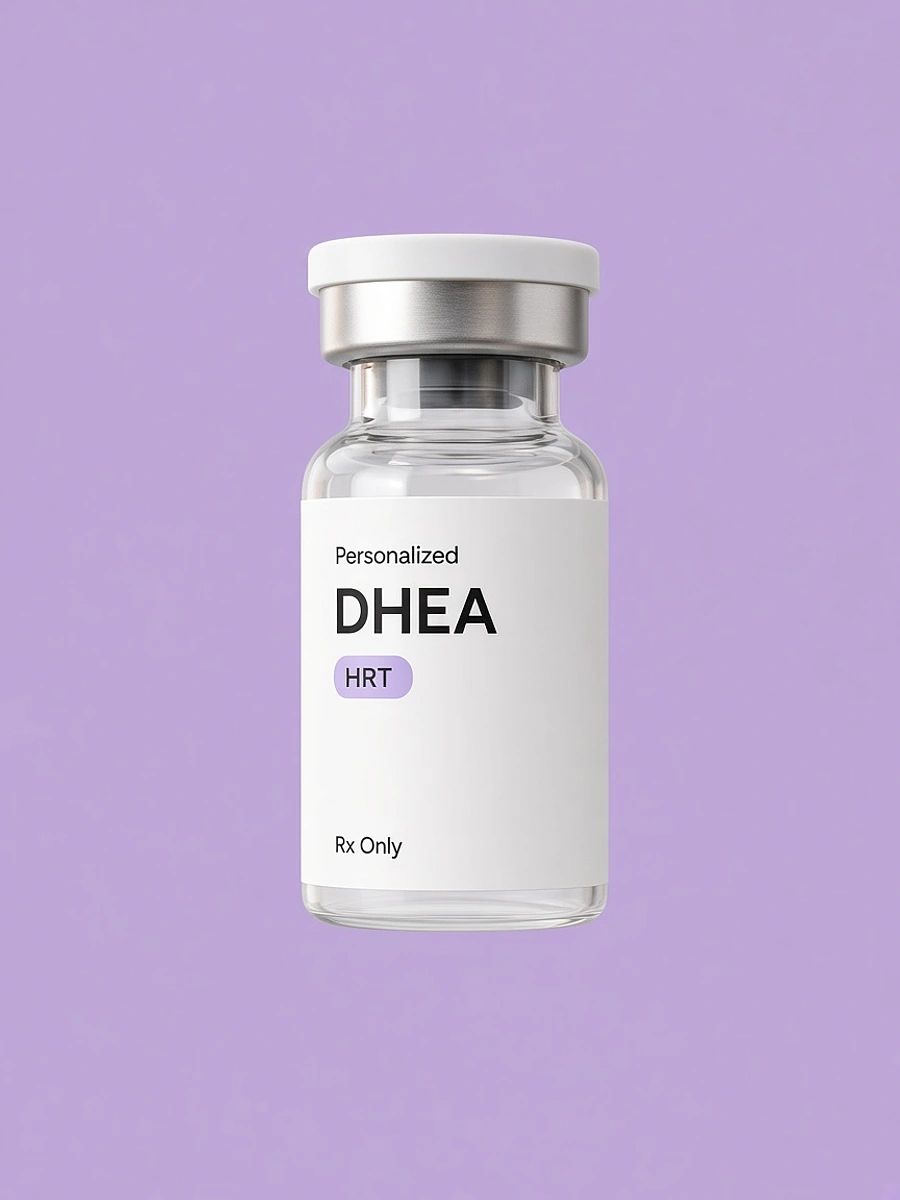
Images are illustrative. Labels shown are not real pharmacy inventory, and people shown are models.
What is DHEA in this pathway?
DHEA is a hormone precursor sometimes discussed in midlife care. It is not a casual supplement in this pathway — clinical review comes first.
Completing intake does not guarantee a prescription.
Why this is not a quick fix page
Hot flashes, sleep disruption, mood shifts, and vaginal discomfort have overlapping causes. Thoughtful HRT starts with history — clotting risk, cancers, migraines, smoking, age, and preferences — not a default dose.
Symptoms first
We center what is disrupting your life, not a marketing checklist.
Risk-aware
Clinicians screen for reasons therapy may be unsuitable.
Alternatives exist
Non-hormonal strategies may be appropriate — your clinician will say so.
How the HRT pathway works
Listen → evaluate → decide together.
Detail your symptoms
Intake captures timing, severity, and what you have already tried.
Clinical weighing
Benefits and risks are reviewed against your personal profile.
Plan or pivot
Therapy if appropriate — or a clear explanation of other options.
Your timeline to care
Respectful pacing with clinical standards at every step.
1. Start your clinical intake
Answer health questions online about your goals, history, and current medications — no in-person office visit required to begin.
2. Licensed provider review
An independent U.S.-licensed clinician reviews your information. Treatment is only considered if medically appropriate for you.
3. Personalized plan if appropriate
If prescribed, your clinician outlines next steps, dosing guidance, and what to expect. Completing intake never guarantees a prescription.
4. Pharmacy fulfillment & ongoing support
When prescribed, medication may ship discreetly — overnight delivery typically within 24–48 hours after fulfillment. Stay in touch with your care pathway as needed.
What’s included in your hormone-care pathway?
- Personalized hormone therapy discussion when appropriate
- Risk-aware licensed review of your history and goals
- Shared decision-making — not a one-size plan
- Alternatives discussed when HRT is not the right fit
- Follow-up expectations if therapy is prescribed
- Discreet fulfillment when prescribed

Efexia exists so people can take a proactive approach to recovery and well-being — with hope, knowledge, and licensed clinical support.
View full bio
Topics your clinician may cover
Hormone therapy risks depend on formulation, dose, route, and your history. Common discussion points include breast tenderness, spotting, bloating, and mood changes — plus rare but serious risks.
- Breast tenderness
- Spotting or bleeding changes
- Bloating
- Headaches
- Nausea
- Mood shifts
Not a complete list. Serious risks (including clotting and certain cancers) must be reviewed personally with a licensed clinician.
Learn more about safety information →Important safety information
Hormone therapies are not appropriate for everyone. Discuss personal/family history of breast, ovarian, or uterine cancers; blood clots; stroke; heart disease; liver disease; unexplained bleeding; smoking; and pregnancy with your clinician before any treatment decision.
Questions, answered
Short answers about this program. A licensed clinician still makes the medical call.
No. A licensed clinician decides whether any hormone therapy is appropriate for you.
You can share preferences. Clinical appropriateness still governs what, if anything, is prescribed.
You should receive a clear explanation and discussion of alternatives when possible.
No. It is educational. Decisions happen with your licensed clinician.
DHEA is on the way
We’re finishing the secure intake path for this option. Browse what’s live today, or ask us to email you when it opens.